Sporty Magazine official website | Members area : Register | Sign in

searchbox

Showing posts with label technology. Show all posts

Barnes & Noble's new Nook: The anti-iPad

Thursday, June 16, 2011

It's not an iPad, or even a Nook Color. But that's the whole point of Barnes & Noble's newest e-reader: it's not supposed to be.

FORTUNE -- Just six months after launching its well-received Android-based Nook Color tablet, Barnes and Noble (BKS) unveiled a major hardware update to the original e-ink-based Nook e-reader that cuts down on bulk, weight, and physical buttons.
Here's the important thing to note right off the bat about this new Nook: it doesn't have a color display like the iPad or the even the Nook Color. There isn't a full-fledged Web browser, email app, or really any third-party apps to speak of.
"Boring!" one Fortune reader complained about the Nook's launch last month. "An iPad does all this and about 1 zillion things more."
I initially agreed. I wouldn't say my iPad 2 3G does a zillion things in comparison, but it's much more versatile. So when I met with the B&N folks to pick up a review device, I was skeptical of its value and timing, particularly its arrival after Nook Color, a device I came to enjoy after the software update last March ironed out the major software kinks and added support for apps like email or one my favorite news curation readers, Pulse.
Some readers -- myself included -- don't want to give up the best features in their current e-readers for the tablet's shortcomings like comparatively shorter battery life and a display that can be tough to view outside. For us, there's the Nook: an unapologetic, laser-beam focused e-reader that does little else and doesn't bother to placate tablet proponents with so much as a full-fledged browser. But what it does do, it does exceptionally well, better than its nearest rival, the Kindle.
What's inside
At $139, the WiFi-only Nook sports a 6-inch touchscreen that marries infrared technology with a Pearl e-ink display to let users navigate with taps and swipes. It's backed up behind the scenes by an 800 MHZ Texas Instruments processor which the company says enables a much smoother reading experience, including quicker page transitions. All of that is housed in a soft, black, rubbererized plastic chassis measuring 5 inches by 6.5 inches by .47 inches  and weighs just under 7.5 ounces -- 35% lighter than the Nook first edition. There are six buttons, including recessed physical page flip buttons users can use if they prefer, and a home button. All that makes for an understated, sophisticated look that trumps the Yves Behar-designed Nook Color.
The Nook's biggest feature is one Barnes & Noble is particularly proud of, so much so they've dubbed the Nook the "Simple Touch Reader." By coupling infrared sensors with the e-ink screen, they've created one of the first dedicated e-readers that doesn't need a slew of physical buttons to get around. Many e-book readers will welcome the change because the tech actually works pretty well: there's little lag between the time you tap, swipe to flip a page, or type a letter, and when things happen onscreen. It's not as responsive as using as a color tablet, but the difference is negligible enough that users won't get frustrated. And as a result, it's easy to use the software-based keyboard.
So what you get here is the benefit that Amazon has been plugging all along with its Kindle -- reading in sunlight or on the beach -- with a responsive touchscreen, making it more intuitive to use than the first Nook or the Kindle.
Another benefit is the reduction of that film negative-like flashing effect we've come to associate with e-ink displays. Here, the company has come up with a neat little trick that it says reduces the effect by up to 80%: instead of having that happen every page, it happens every six pages. When you're reading an ebook, that claim proves true, but when you're navigating through the Home screen or looking for books in Barnes & Noble's online book store, it's not -- there's still a lot of flashing action. Luckily, screen transitions are quick enough it's not a major issue.

The Nook's new Home screen
On the software side, the Nook runs off a heavily modified version of Android 2.1. The only vestige of Android you'll likely recognize is the occasional Web browser window that pops up if you click on book embedded links.
The user interface (UI) is really all about the newly simplified proprietary software, which simplifies the Nook Color's UI even further. According to Jonathan Shar, the company's general manager for digital newsstand and emerging content, it's supposed to be so simple that users should only have to tap up to three times to get anywhere they want to go. And unless you're banging out the name of a title in a book search, that's pretty much true. There's a homescreen with three panels: a "Reading Now" area that displays what book users are currently reading and the number pages of left, "New Reads," or other ebooks in your library you haven't touched, and "What to Read Next," a social-focused section that displays what say, Facebook friends are reading. Alternatively, pressing the physical Nook button at the bottom, brings up a strip of icons that access the Home screen, your full library, the B&N shop, a search feature, and settings.
The last word
Releasing a black-and-white e-ink-based e-reader after a color screen e-reader tablet sounds counterintuitive, but I'm willing to bet the new Nook does well anyway, particularly with e-book readers who want a device that really excels at its purpose: reading. It's lighter and smaller than the iPad, so I don't have to prop it on my lap; it's got a display that doesn't strain my eyes during long periods, and battery life is pretty stellar. (I don't know about that two month claim, but after reading more than three hours a day on it since I got it last week, I've still got plenty of juice left.) And because of that touch screen and user interface, scooting through menus and even just flipping pages makes makes navigating a pleasure.
All that adds up to a win for Barnes & Noble, which has struggled recently with the closure of stores as reading has shifted towards digital faster than many analysts originally anticipated. The Nook won't make you forget about that iPad, but it will remind you that Apple's tablet has a ways before it can be everything to every user. Until then, or at least until Amazon answers B&N's rallying cry with a new Kindle of its own later this year, this new Nook will be the e-reader to beat.

Today's video gamer? It might not be who you think


A woman plays games at the Sony PlayStation booth at last week's 
Electronic Entertainment Expo in Los Angeles.
A woman plays games at the Sony PlayStation booth at last week's Electronic Entertainment Expo in Los Angeles.
(CNN) -- At 37, Lisa Sharp is comfortable calling herself a video-game junkie. But that wasn't always the case.
"I was the typical high-school girl who always watched the guys play and never picked up a console until well after college," she said.
Then, one day, the cable was out, so she grabbed a controller for her roommate's Nintendo 64. The rest is pixelated history.
Now, she and her husband have an old Nintendo 64 of their own. And a GameCube. And a PlayStation 2. And a Wii. And, as of last Christmas, a PlayStation 3.
"It relaxes me," said the Atlanta resident, whose favorites include the "Legend of Zelda" and "Final Fantasy" series. "My job gets a little bit crazy at times, so it's nice to go slash and bang stuff around."
As a mom who works in the finance department at Georgia Tech, Sharp hardly fits the stereotype of the avid video gamer -- that teenage or 20-something guy in the basement grinding out hours on his console or PC.
And that's part of a story that those in the video-gaming world already know: thanks partly to games on new platforms such as Facebook, smartphones and tablets, gaming is more popular than ever. Some observers even see parallels to the early-'80s arcade heyday, when games such as "Pac-Man" became mainstream phenomenons.
Last year, video-game software and hardware raked in more than $25 billion, according to the Entertainment Software Association, a gaming industry trade group. Compare that with the $7.3 billion the association reported in 2004, and it's not hard to see what's happening.
"I still think we have a lot of growth to go, even though we're at the highest point ever of people playing video games," said Tal Blevins, vice president of games content at IGN Entertainment. "As we have grown up with video games, it's just become a normal part of society.
"Video games did seem weird to our parents when we were young. But now, we're the old fogies, and it doesn't even phase us."
The massive growth of the past few years, evidenced at last week's Electronic Entertainment Expo in Los Angeles, has moved on two tracks.
The 'blockbusters'
The first is the swelling mainstream popularity of so-called "hardcore" gaming titles, the detailed, immersive and artfully rendered games that take even the most devout players hundreds of hours to complete (longer, if they opt for multiplayer challenges that can last forever).
Last year's "Call of Duty: Black Ops" didn't just break video-game records. Selling 5.6 million copies in 24 hours and grossing $650 million in its first five days, it was the biggest entertainment opening of all time -- bigger than "Titanic," "Avatar" and every other Hollywood blockbuster.
The previous record holder? "Call of Duty: Modern Warfare 2," which grossed $550 million in the same five-day span. By comparison, "Avatar" grossed $77 million in its opening weekend.
"They've become blockbusters in the way we traditionally talk about something at the cinema," said Rich Taylor, a senior vice president with the Entertainment Software Association. "If you look at the dollars and cents compared to the blockbusters coming out of Hollywood and the publishing world ... (video games) are the ones that are knocking it out of the park."
The rise of the social game
But the industry has also made massive strides on a second front. The recent explosion of so-called casual gaming has brought new populations into the fold and threatens to forever blur the distinction between "gamer" and "non-gamer."
Nintendo's Wii, with its motion-based controllers, unleashed a flood of family-friendly party games when it was released in 2006. It quickly became the most popular gaming console in the world and was followed last year by Microsoft's Kinect and Sony's Move motion systems.
But the bigger advance might be happening on smartphone screens and Facebook pages.
Zynga, the makers of the alternately addictive or infuriating FarmVille, is worth an estimated $14.5 billion and expected to make its initial stock offering in the near future.
And versions of "Angry Birds," the addictive mobile game by Rovio, recently reached a staggering 250 million downloads on multiple platforms, from the iPhone and iPad to Google's Chrome browser.
"Mobile, and the iPhone in particular, is creating a so-much more casual and mainstream audience," said Dave Castelnuevo, co-creator of "Pocket God," a perennial app-store favorite that has been downloaded more than 4.5 million times since debuting in 2009. "They're not your hardcore gamers. My wife can't quit 'Angry Birds,' and she's never picked up an Xbox joystick."
The numbers definitely show a growing gamer base.
According to ESA's statistics, the average video-game player last year was 37 years old (like Sharp). That's up from 30 in 2004.
Forty-two percent of players were women. And nearly half (47%) of the online games people reported playing could be categorized as "casual" -- puzzles, trivia, board games, card games and the like.
More "hardcore" titles will always be in demand and "the industry has answered that bell time and time again," Taylor said. "But it's an industry that has expectations beyond just that audience. Any more, if it has a screen, it's going to have games."
The rift
Among diehard video-game enthusiasts, the rise of casual games has caused resentment in some quarters. On CNN Tech, any passing mention of FarmVille brings waves of fury in the comments section.
A story from E3 on mobile favorite "Fruit Ninja" coming to Microsoft's Xbox Kinect system prompted angry responses. Among them: "E3 is currently going on and THIS is the crap that mainstream media decides to write to the public about? How about talking about real games rather than app crap."
"I think sometimes, a lot of the people who are in the old-school mentality of hardcore gaming feel a little threatened with what's been happening over the past two or three years because it was, to them, almost this secret world," IGN's Blevins said. "It's like a 'We don't want you in our clubhouse' mentality."
At E3, Nintendo's world president Satoru Iwata talked with CNN about the rift as he promoted the upcoming Wii U, which Nintendo hopes will appeal to avid and casual gamers. He said that if tension between the two groups continues, it could be dangerous for the industry.
"Many people in this industry tend to categorize our customers into two groups -- one is the core gamer and the other is casual gamers. They somehow say that these two groups will never mix or overlap ... " Iwata said through a translator. "If we maintain that kind of wall or psychological barrier separating the two groups, someday I'm afraid that the culture of video games will be diminished."
Coming together?
Many observers say that, as gaming's growth continues, it's just a matter of time before those barriers fall.
"I consider myself a 'good game' gamer," said Taylor. "I play the games that are high quality, that entertain me. I play first-person shooters. I play sports games. I play 'Little Big Planet.' I play 'Angry Birds.' I play a lot of 'Scrabble.' I don't sit there and say 'I'm a hardcore gamer so I only play these titles.' I don't go to the store and see the hardcore-gaming section."
Castelnuevo, whose "Pocket God" franchise has branched out into toys, comics and cartoons, agrees.
"I think it's all growing," he said. "The 13-year-old males (who play "Pocket God") also play Xbox. They also play Nintendo DS. They love Mario and Batman and 'Bioshock.' "
Blevins also sees the divide getting thinner and says that, one day, even the term "gamer" may be outdated.
"You don't say 'I'm a movie-er' or 'I'm a book-er,' " he said. "Video games are now just another form of entertainment. There was once a little bit of that stigma -- the lonely kid in the basement. It's very different these days."

Nokia and Apple settle patent dispute

iPad, AFP/Ggetty  
Nokia claimed some technology in the iPad infringed its patents

Nokia and Apple have agreed a technology licensing agreement that ends the long-running legal dispute between the two firms.
"The agreement will result in settlement of all patent litigation between the companies," Nokia said.
Nokia sued Apple for patent infringements in 2009 and extended the action in December last year.
Apple had countersued, accusing Nokia of infringing its patents.
Nokia said Apple had agreed a one-off payment, the value of which was not disclosed, and ongoing royalties to use its technologies.
Apple said the deal covered both companies' patents.
Counter claims
What this story really shows once again is how one phone, the iPhone, has proved the undoing of a company whose dominance seemed unassailable just four years ago”
"We are very pleased to have Apple join the growing number of Nokia licensees," said Nokia's chief executive Stephen Elop.
"This settlement demonstrates Nokia's industry-leading patent portfolio and enables us to focus on further licensing opportunities in the mobile communications market."
Apple said the two firms had agreed to "drop all of our current lawsuits and enter into a licence covering some of each other's patents, but not the majority of the innovations that make the iPhone unique".
"We're glad to put this behind us and get back to focusing on our respective businesses."
'Positive news' Nokia's various claims against Apple included alleged patent infringements of touch interfaces, caller ID, display illumination, and 3G and wi-fi technology.
Apple had also claimed that Nokia had infringed many of its patents.
Both sides had always denied each other's claims.
"This is the first positive news from Nokia for a long time. They can both focus on their businesses now, and the dispute was settled to Nokia's advantage," said Mikael Rautanen at research group Inderes in Helsinki.
At the end of last month, Nokia said it expected sales and profit margins for the current quarter to be well below its previous forecasts.
The company has been struggling to reposition itself in the rapidly-growing smartphone sector, where it is trying to make up ground lost to competitors such as Apple's iPhone and phones using Google's Android operating system.

Hewlett Packard sues Oracle over Itanium chip dispute

Itanium Chip The Itanium chip is at the heart of the latest dispute between HP and Oracle

Hewlett Packard (HP) is suing Oracle over a chip dispute in the latest clash between the two former allies.
The lawsuit accuses Oracle of behaving illegally in deciding that future versions of its database software will not support one line of HP servers.
The servers use an Itanium chip that Oracle insists is being phased out.
HP claim that Oracle's decision to stop the support will hurt its clients - Oracle has denied the claims, calling the lawsuit "malicious and meritless".
Relations between the two companies have deteriorated in the past year.
HP's former boss, Mark Hurd, joined Oracle almost a year ago.
HP had then threatened court action, claiming that Oracle would "exploit the knowledge of HP's strengths and weaknesses" as a result of hiring Mr Hurd.
'Strong-arm tactics'
Bill Wohl Hewlett Packard
The current dispute is the result of a combination of factors.
It centres around the future of the Itanium chip manufactured by Intel and the growing rivalry between the two companies in the field of server hardware market.
In March, Oracle announced that its database software would no longer support HP servers that use the chip.
It said it had evidence that Intel was planning to phase out the product, hence it did not plan to provide software that supports the processor - something Intel has denied.
But Oracle said in a statement that: "Intel's plans to end-of-life Itanium will be revealed in court".
HP says Oracle's real concern is to try to force customers to buy the Sun Microsystems servers manufactured by it.
The company claimed Oracle was using "strong-arm tactics to coerce customers into replacing their HP servers with Sun servers they do not want".
HP said it had sent a legal notice to Oracle last week, but a lack of response from Oracle had left it with no choice but to take legal action against its former ally.
"The silence from Oracle is deafening. We are very disappointed it has come to this," said Bill Wohl of HP.

Apps for socially awkward people

Wednesday, June 15, 2011

If you're bad at networking, try an app that helps those who need a little greasing to get socially fluid.
Editor's note: Brenna Ehrlich and Andrea Bartz are the sarcastic brains behind humor blog and book Stuff Hipsters Hate. When they're not trolling Brooklyn for new material, Ehrlich works as an associate editor at Mashable.com and Bartz is news editor at Psychology Today.
(CNN) -- It's a verifiable fact that the Internet is basically for three things: porn, cats and awkward people (and any ensuing combination of the three).
Yes, the Web is a haven for the socially awkward. But we've got good news for those of you who habitually consort with corners at social functions and have a penny loafer permanently lodged in your mouth: That very same Internet is chock-full of tools designed to help you out in the real world as well.
In the past, such people were forced to resort to copious amounts of alcohol and/or therapy (always a wonderful combination) to get through basic social exchanges, but thanks to the many and varied wonders of the Web -- in all of its portable iterations -- they now can fake some fairly convincing social competence.
If you are among that huddled mass of shoe-gazers and heavy sighers, read on -- unless, you know, you're otherwise engaged with one of the Internet's other uses. In which case, er, see you in a few.
If you're remiss at casting a net when networking...
We see you there, professional person at a networking event, clutching the edge of the bar like a child at her first recital clinging to the lip of the piano. The condensation from your whiskey glass is dampening your hand, making you worry that should someone clasp your fingers in a handshake, they would think you're an unusually sweaty person.
Oh, great, now you really are sweating. Yup, you should probably just go home and resign yourself to the fact that you will never get ahead, and that the world is not, in fact, your oyster -- it's just an empty shell.
Before you go all Sylvia Plath on us, you might want to check out Sonar, an iPhone app that launched in May to help those of us who need a little greasing to get socially fluid. Basically, the app connects to several of your social networks (Foursquare, Twitter and Facebook), so that when you check into a location, you can see all the people there, as well as what mutual friends you have on the Book of Faces and "That Twittering Thing."
Then, when you scan the room, you won't see a sea of faces waiting to judge you, but friends of friends (or at least acquaintances). From there, you can introduce yourself with confidence as "John's friend," or "Mary's co-worker." We would, however, avoid: "We both follow Yanni on Twitter!" That's awkward for everyone involved.
If your opening lines frequently get crossed...
Bars are changeable beasts. One night, the dance floor is littered with beautiful specimens, the evening's denouement involving you and one of its denizens making out in the mists of the requisite fog machine.
The next, the drinking hole in question is empty, save for one dude in a deep V-neck T-shirt held together with safety pins, drawling on and on about how "Vegas is the most culturally rich city in the world."
Enter SceneTap, an upcoming iPhone app that will tell you -- in real time -- how many people are at a bar, what the girl-to-guy ratio is, and the age range. The app will also include forums in which barhoppers can rate establishments and converse directly with the bar itself about the scene, as well as get info about deals.
Rather creepily, the app will garner age and gender data via cameras in a selection of registered bars, but, hey, Facebook is already using facial recognition to auto-tag snaps, so you might as well just submit to your voyeuristic, digital overlords already.
While you're waiting for SceneTap to hit the, well, scene, you can check out Assisted Serendipity, a Foursquare plugin that alerts you when the guy-to-girl ratio at your drinking spot of choice has adjusted to your favor. Or you could just leave it up to fate. Sadly, however, there's no app for that.
You're not a sharp-dressed wo/man...
Your entire closet is residing among your tangled bedsheets and you're close to rending cloth like a man in mourning. You have 15 minutes to get ready, and you can't attend this event naked -- it's not that kind of party. What's a body to do?
Well, if the garments littering your king aren't all sweatpants and T-shirts from local eateries ("I Got Crabs at Marco's Shack!"), might we suggest crowdsourcing your look? Go Try It On is a website and iPhone app that lets you gather real-time feedback about what's gracing your body. Just upload a snap and let the masses -- or a private group of friends -- decide if you're fit to go outside.
And if you are of the sweatpants and novelty T persuasion (and don't currently work as a stand-up comic) there's always Hendricks Park, a Skype-powered personal shopping service.
Basically, you pay a fashion consultant -- one who you'll never have to meet in person -- to send you clothing. No leaving the house required. Still, we do suggest firing up one of the aforementioned apps after receiving your bounty of vestments -- or you'll just be one well-dressed agoraphobe.

Unlocked iPhone 4 now available in the U.S.

Unlocked iPhone 4s are now on sale in the U.S. in both black and white. The device is nearly the same as its predecessor.
(Ars Technica) -- After offering an unlocked version of the iPhone overseas for some time, Apple has finally begun selling an unlocked version of the GSM iPhone 4 in the U.S.
Rumors had been building over the last several days that Apple was preparing to add such an item to its inventory system sooner than later, and those rumors came to fruition early Tuesday morning.
The unlocked 16GB iPhone 4 is now available directly from Apple for $649, with the 32GB model going for $749. (Bet you're hankerin' for those subsidized phones again!)
Unlocked iPhone 4s are available in both black and white and the device is otherwise the same as the AT&T-locked iPhone 4 that many of us are already familiar with.
Aside from being beneficial for travel -- GSM is essentially the world standard when it comes to cell phones and travelers will be able to use the device on other GSM networks outside of the U.S. -- an unlocked version of the phone means that users can upgrade without committing to a new contract with AT&T.
T-Mobile in the U.S. also offers a GSM network that partially works with the iPhone 4, but those who take unlocked phones over to that network won't be able to use T-Mobile's 3G -- the device works with T-Mobile's EDGE only.

Google adding search by voice, pictures

Google search guru Amit Singhal announces new search features at Tuesday's press event.
San Francisco (CNN) -- The plain Google search box will soon be able to handle more than taps on a keyboard.
Google is bringing features pioneered on smartphones, like voice and image search, to its flagship product, the company said at a news conference here on Tuesday.
The speech-recognition tool began showing up as a microphone button on the right-hand side of the Google.com search box for some visitors on Tuesday. It will only be available on Google's Chrome Web browser for now, but Google executives say they hope other software makers implement the technology to support the feature.
Like on Android or the Google application for the iPhone, people can click the mic icon on Google.com, and say a phrase or question into their computer microphone.
The speech technology attempts to account for accents and context in order to transcribe the recording into text. This produced mixed results in my testing, speaking in plain English or with a faux Cockney accent.
Take a peek at Google voice search
The image-search feature will start rolling out in the next few days, said Johanna Wright, a Google search director. "Every picture has a story, and we want to help you discover that story," she said.
Image Search can, say, look at a family vacation photo and figure out where it was shot, or help explain images that become Internet memes, such as Lolcats. The recognition technology applies a bunch of Google's proprietary algorithms to photos, but facial recognition isn't one of them, executives said in an interview with reporters.
People using newer Web browsers will be able to drag an image file from the desktop onto the search box. Additional features are available to those who install the Google Toolbar in Firefox.
Google Instant, the immediate suggestions offered when a user is typing into the search box, will debut on Google's image-search section "in the coming weeks," said Google exec Amit Singhal.
To complement Google's quest for high-speed Web surfing, the company plans to roll out a feature called Instant Pages. It will sometimes load the top search result on your computer before you click on the link, so that the page pops up instantly once you do.
The feature will only be available in Chrome, starting with the beta version of the software later this week.
That many of Tuesday's announcements will initially only be available in Chrome limits their reach. In May, Google controlled 65.5% of the U.S. Web search market, according to comScore, but Chrome only had 12.5% of browser usage -- far behind Internet Explorer and Firefox -- said research firm Net Applications.

How early Twitter decisions led to Weiner's downfall

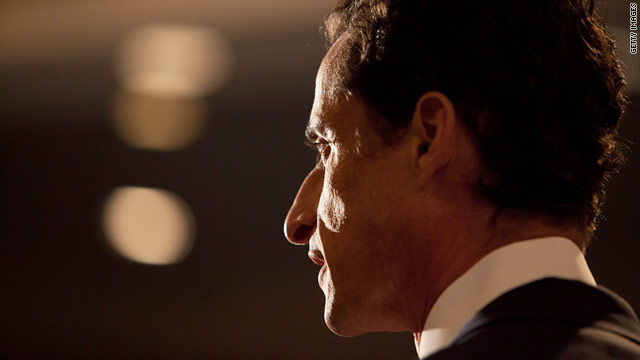
Anthony Weiner used Twitter to establish his feisty personality with a nationwide community, but it was also his undoing.


Anthony Weiner used Twitter to establish his feisty personality with a nationwide community, but it was also his undoing.

(WIRED) -- Now that the Anthony Weiner Twitter meltdown has pretty much played out, I'm surprised that there hasn't been much discussion of the butterfly wing-flap that brought him down: Twitter's rules of engagement when it comes to "following."
The success of a social network is largely determined by its settings. In 2006, an engineer named Jack Dorsey had an idea for a way for people to share short updates on their lives with friends and family.
Working with a small team, Dorsey and his colleagues began developing and testing the product. This included determining the built-in boundaries of the service, a process which would determine the breadth and purpose of the entire project.
Twitter was a simple idea but settings had to be just right, like the proper temperature for a soufflé.
WIRED: Twitter creator Jack Dorsey returns
Should the rules be very restrictive, to preserve privacy and intimacy? (Too much restriction would make the service less useful.) Or should they be expansive, and invite a wide circle to share one's status reports? (Too broad a channel would mean a depersonalized cohort.)
The breakthrough that enabled Twitter to become the wildly successful service it is now came from a twist that was much more significant than even its founders knew: They made it possible to "follow" someone's messages without requiring permission.
Essentially you would take out a subscription to someone's Twitter stream. You would follow your best friend or your brother in the same way you would follow Barack Obama, DeSean Jackson or the New York Times.
This was a break from the traditional two-way agreement that ruled communications in previous social systems. This changed Twitter from an asynchronous instant messaging system into a hybrid of a social network and broadcast medium.
"The relationship model was something that we debated a lot," says Evan Williams, who headed the company (Odeo) that created Twitter. "In the first version, by default you were private." (This quote is from a conversation I had with Williams in 2009, when I was working on a story for Wired.)
But then Dorsey's team came up with the idea that you could follow someone without them following you.
"That was really important," says Williams. "From my perspective, I wanted something like a blog relationship model. What I thought was beautiful about blogs as opposed to e-mail or anything else is it's completely up to the recipient of the information whether or not they consume it."
But Twitter was much more intimate than blogs. Following someone on Twitter was not exactly like setting up a blog feed or subscribing to a magazine. You became part of a visible community.
The relationship model was something that we debated a lot.
--Evan Williams
In order to make this happen, Twitter made public the list of people you followed, as well as the list of people who followed you. You would notice when your friends followed the same people you did. You could make connections with other people who followed the same tweeters you followed.
To further encourage the community aspect of Twitter, the founders determined that by default, all messages would be public. Weirdly, one of the questions that came up during this discussion was whether people would be creeped out when it came to flirting and other personal issues.
"This openness was the result of a lot of thought around the way we had started recognizing that people were communicating online," says Noah Glass, who was part of the original team. (I interviewed Glass for the aforementioned story.) "We were on MySpace, and I got into a lot of trouble from various girls posting things on that thing out in the open, and I started thinking about openness -- we all started thinking about openness.
"We come from a world where privacy is important. But we realized that not everyone shared this feeling about privacy in that same kind of way," Glass says. "People were having really intimate discussions out for everyone else to read. I realized that that the level of privacy we thought was important, was not necessarily important to a certain group of people for a certain type of communication. And so making any conversation open and followable was something based on those systems that were becoming popular."
This thinking influenced the settings when Twitter, because of user demand, implemented a "reply" feature. The replies, just like any other tweets, were public.
But what if you wanted to have a truly private conversation, as with SMS or e-mail, with someone on Twitter? This presented a problem to those with a huge following.
WIRED: Reporter tweets cell number to world, no one calls
One way to do this would be to allow users to send a private message to any other user, just as they can with e-mail. But celebrities and others with large followings didn't want to open a private channel to just anyone.
So Twitter decided that for "direct" messages there should be some limits. Direct, private messages could only be sent to someone who followed you. The fact that you followed someone meant that you'd probably be happy to hear from him or her. To have a back-and-forth conversation, then, both parties would have to be following each other.
We realized that not everyone shared this feeling about privacy in that same kind of way.
--Noah Glass
Otherwise, once you hit a few keystrokes to specify that something is a direct message, sending a private tweet is not all that different from sending a public tweet.
The service has never really figured a way to foolproof the process. It is a rare Twitter user -- even an experienced one -- who has not mistakenly sent something intended as a direct message out into the public Twittersphere. Happens all the time.
These settings helped make Twitter catnip for loquacious politicians like Anthony Weiner, who used it to establish his feisty personality with a nationwide community.
But it also proved his undoing when he misused Twitter for sordid sexual contact with women.
Twitter's regimen of rules tanked Anthony Weiner in several ways.
First of all, it provided a public record of the initial contacts that Weiner made with the women.
Here was the apparent pattern of Weiner's inappropriate communications: a woman would tweet an encouraging public message to the legislator -- which would be public, the only way she could communicate to him. (By and large, since the women were political supporters and not thinking of themselves as material for his sexual fantasies, this wasn't a problem for them.)
Then Weiner would respond to them -- but his responses were constrained by the knowledge that his replies were public.
Weiner needed a more private channel of communication for flirtations up to and including pictures of his package. Since the women followed him already, he could send them direct messages. But to receive their replies, he had to follow them in return. Only then could he engage in flirting or sexual repartee.
Weiner seemed not to realize the extent to which Twitter's rules still made him vulnerable.
The women were publicly listed among those accounts he followed. Since he only followed around 200 people, these new followers seemed out of place among the politicians, journalists, and celebrities on his list.
It was all too easy for a political foe to notice that Weiner was adding young women (and in at least one case, a porn star) to his followers soon after a public exchange.
And that is exactly what happened. A right-wing activist noticed Weiner's pattern and then harassed the young women the congressman followed.
But even then, Weiner did not curtail his behavior. He simply unfollowed those women and found new ones to flirt with. His Twitter use was a train wreck waiting to happen.
The train wreck occurred when Weiner confronted the confusing rail yard that Twitter's founders never truly fixed: the inadequately drawn distinction between a public message and a direct one.
When Weiner decided to send a young woman a picture of his crotch -- wearing gray boxers that barely contained his tumescence -- he had already taken the step of following her. But he made a common mistake between a direct private message and a public reply, and sent the picture out to the tens of thousands of people who followed him.
That was so crazily egregious that Weiner's initial lies that his account had been hacked seemed plausible.
But the evidence of his deeper misbehavior was already out in the open: the thumbnails of the young women he followed, publicly available on his Twitter account.
Journalists, political rivals, and right-wing muckrakers had no problem finding multiple women who had flirted and even received more graphic photos via "private" Twitter messages. When asked about what happened, the women talked, and Weiner's original "I was hacked" story fell apart.
Weiner was caught in the social net, undone by a bunch of conversations several years earlier between some San Francisco geeks trying to figure out the settings of a cool new product.
The details of web product design had led to the pants being pulled down on a promising political career.

Reading apps sell subscriptions to fuzzy feelings

Instapaper, a popular app for saving Web articles for offline reading, offers subscriptions but gives little in return.

(CNN) -- Marco Arment's salesmanship could use some work.
To complement the one-time $5 fee he charges for his popular mobile application called Instapaper, Arment added a subscription service in October. And what does the $1-per-month plan get you?
"Right now?" reads the question-and-answer-style come-on. "Almost nothing, except knowing that you are supporting the Instapaper service's operation and future feature development."
Not exactly a Steve Jobsian pitch, but Arment, whose iPhone and iPad apps for accessing news articles offline have more than 1.5 million registered users, has found takers. He declined to say how many people subscribe, but "it's enough to pay for all my servers."
"I thought I would have to offer a lot more," said Arment, who recently began testing new integration for Kindle users exclusively with subscribers. So that's something. "I knew I'd have a lot of goodwill out there, but I thought people would need more of a bonus," he said.
Instapaper's subscription-cum-donation model has inspired others, especially those in the online-writing world, to follow suit.
Longreads, a website and popular Twitter feed that links to lengthy articles chosen by editor Mark Armstrong or readers, added a subscription service last month.
Because Instapaper is designed to strip distracting elements from Web pages, the two services often go hand in hand, and Longreads has buttons below each link for sending them to an Instapaper reading list. Also like Instapaper, Longreads' membership program offers little more than a warm-and-fuzzy feeling.
"I wanted to emphasize that this membership is something people can choose to do mostly to support the service," Armstrong wrote in an e-mail. "We think our membership perks will grow but don't want to over promise."
People who pay $3 per month will eventually get to test new features first. Paying $30 annually gets you a travel mug emblazoned with the logo.
Longform, a similar site with a similar name, allows for one-time donations. Quaint.
Donation buttons have long been a common occurrence in Internet and computer software. Developers have a name for it, "donationware," which generally offers a full version of the program with an unintrusive request for one-time donations.
But perhaps thanks to the proliferation of the "freemium" model, which gives a feature-rich app for free and then charges for power-user features, and of online subscriptions, such as Audible, Netflix and Spotify in Europe, recurring donations are starting to catch on.
They're giving podcasters a flowing revenue stream. TWiT founder Leo Laporte, who runs a network of advertising-supported Internet shows, takes his salary from fans' recurring donations. No Agenda, an online program co-created by podcast pioneer and former MTV personality Adam Curry, asks listeners to donate $50 a month.
A framework called Kachingle gives website owners a button to allow visitors to easily leave tips with a couple of clicks.
Readability, a service similar to Instapaper, also added a subscription program, but the idea is that 70% of each subscriber's monthly fee (the minimum is $5) is divided among the writers and media organizations the user reads the most.
However, the publisher doesn't get its cut until signing up for an authorized Readability account. Some publishers, such as the Slate Group, have indicated that they would not bother unless the amount is substantial.
Readability keeps separate escrow accounts earmarked for publishers and does not dip into those funds, creator Richard Ziade wrote in an e-mail. More than 1,000 websites have signed up to be considered for royalties, he wrote. He declined to say how many subscribers Readability has, which publishers are on board, how much money has been paid out, or how much is on hold.
In essence, the only guaranteed payout is the 30% that goes to Ziade and the New York developers who maintain the service.
Arment, who designed a mobile app for Readability that was never released due to disagreements with Apple over financials, echoed the idea that Readability's business would not make much of a mark on big publishers' balance sheets. (Apple, by the way, also rejects apps that solicit donations.) While media conglomerates like the New York Times account for the most-saved items on Instapaper, they're only a faction of the overall publishers being read through the service, so the payout wouldn't be huge, he said.
Last year when Instapaper began to pick up steam and revenue, Arment left Tumblr, the fast-growing blogging company he co-founded, to focus full-time on his reading tool. (He's also an advisor to Readability.)
With Instapaper's recurring app donations, members are charged $3 every three months. (Arment needs to charge at least $3 in order to cope with fees imposed by PayPal, he said.) One guaranteed perk allows subscribers to turn off the small text ads on the site.
Arment felt compelled to call it a subscription service rather than donations, even though he agrees the perks aren't strong.
"If you call it anything else other than 'subscription,' I think you'll get a lot of angry people when it automatically renews itself," Arment said. "I don't want to trick anyone into paying me. It's $3. The reality is: if you don't want to give me that $3, I'd rather not take it from you."

Is Facebook growth stalling in North America?

Data from blog Inside Facebook says the social-networking site is losing active users in the United States.

(CNN) -- Facebook, the seemingly unstoppable juggernaut of the social-media world, continues to grow, steaming toward 700 million registered users. But has the site tapped out its potential in America?
The site lost more than 7 million active users in the United States and Canada last month, according to data from Inside Facebook, a blog that tracks the site and its development platform.
Mexico, where Facebook use started later than in the other two, added about 1 million users, according to Inside Facebook's data service. But Facebook's slowing growth in North America raises the question of whether the site has finally found all the users it can in places where it's been around for a while.
Last month was the first time the United States had lost active users in a year, Inside Facebook said, while ups and downs have been more volatile in Canada.
Facebook is questioning the accuracy of the data.
Facebook running out of friends?

"From time to time, we see stories about Facebook losing users in some regions," said a statement Monday from a Facebook spokesperson. "Some of these reports use data extracted from our advertising tool, which provides broad estimates on the reach of Facebook ads and isn't designed to be a source for tracking the overall growth of Facebook.
"We are very pleased with our growth and with the way people are engaged with Facebook. More than 50% of our active users log on to Facebook on any given day."
Facebook reached 687 million users at the beginning of June, according to the stats. But its growth rates appear to be slowing. Facebook gained 11.8 million active montly users in May, compared to 13.9 million in April. More than 20 million users were added during every month last year.
The United Kingdom, Norway and Russia, other countries where Facebook was adapted relatively early in its existence, each dropped by about 100,000 active users in May.
Still, expansion continues as Facebook focuses globally. Major population centers like Brazil, India and Argentina all saw growth of more than 5 percent in May, with Brazil leading the way, jumping from about 17 million users to about 19 million.
Inside Facebook acknowledged that seasonal changes such as college graduation, bugs in the Facebook advertising software or other one-time anomalies can affect data.
But the report does raise questions, they said.
"[B]y the time Facebook reaches around 50% of the total population in a given country (plus or minus, depending on internet access rates in that country), growth generally slows to a halt, as we've noted before," read the post, by Eric Eldon.
"So far, Facebook has been able to make up stalls and losses with big gains in heavily-populated developing countries like Mexico, Brazil, India and Indonesia."
Moving into China would be one way to insure its goal of reaching 1 billion active users, Eldon wrote. But agreeing to the terms that likely would come from the country's Communist regime might also hurt Facebook's popularity back home.

Government 'may have hacked IMF'

Tuesday, June 14, 2011

Hand on mouse, Science Photo Library A spear-phishing attack is likely to have kick started the breach

Related Stories

Hackers who broke into the International Monetary Fund's computer system may have been backed by a nation state, according to security experts.
They point to the sophisticated nature of the attack and the resources needed to develop it.
Malicious software, designed to steal confidential files, was installed on at least one IMF computer.
Although government involvement is widely suspected, the IMF has not released enough details to be sure.
Digital insider Based on the limited information made public, it appears that the attack came from a specific PC that had been deliberately infected.
Hacker software was likely to have been installed on it in what is known as a spear-phishing attack, which sees highly targeted scam e-mails sent to specific victims.
A memo circulated internally at the IMF reported that "suspicious file transfers" had been detected.
Tom Kellerman, a security expert who has worked for the IMF and now sits on the board of the International Cyber Security Protection Alliance told Reuters news agency that it was "a targeted attack" with code written specifically to give a nation state a "digital insider presence" on the IMF network.
Graham Titherington, a security analyst with research firm Ovum agreed with the nation state theory.
"Any attack that shows money, time and resources went on it points to a state attack. States and their intelligence agencies have far more resources than criminal gangs," he said.
The information held by the IMF would clearly be most valuable to a country, he added.
"It has masses of economic information from the performance of countries to the state of their balance sheets. For countries deciding where to invest it is invaluable," he said.
State-sponsored hacking has gained prominence in recent months.
"Google shifted the debate by going public on a hack attack believed to be by China," said Mr Titherington.
The Chinese government has denied involvement in the recent attack on Google's e-mail accounts.
The incident compromised the personal Gmail accounts of hundreds of top US officials, military personnel and journalists.
Google said that the campaign to obtain passwords originated in the Chinese city of Jinan and was aimed at monitoring e-mail.
According to Mark Darvill, director of security firm AEP Networks, many countries are involved in cyber espionage but China remained at the "forefront".
"China has recently set up a cyber terrorism unit which is very likely to be looking at opportunities rather than to stop attacks," he said.
Convenient excuse Not everyone is convinced that state-sponsored attacks or Advanced Persistent Threat (APTs) are the cause of the IMF hack.
Tal Be'ery, a web researcher at security firm Imperva said it could be a "convenient excuse".
"It is easier for organisations to hide under this excuse when really it is something lacking in their defences.
"We don't have enough credible information about the IMF attack. It needs to provide good evidence that it was a APT. It is just as likely to be a lone hacker acting out of curiosity," he said.
The most high profile state-sponsored attack to date remains the Stuxnet worm, which targeted Iran's nuclear facilities.
Experts believe the complex malicious code originated from either the Israeli or US governments.

Laser is produced by a living cell


Cell emitting laser light (M Gather) The single-cell lasers were less than 20 millionths of a metre across

Related Stories

A single living cell has been coaxed into producing laser light, researchers report in Nature Photonics.
The technique starts by engineering a cell that can produce a light-emitting protein that was first obtained from glowing jellyfish.
Flooding the resulting cells with weak blue light causes them to emit directed, green laser light.
The work may have applications in improved microscope imaging and light-based therapies.
Laser light differs from normal light in that it is of a narrow band of colours, with the light waves all oscillating together in synchrony.
Most modern forms use carefully engineered solid materials to produce lasers in everything from supermarket scanners to DVD players to industrial robots.
The new work, by Malte Gather and Seok Hyun Yun at the Wellman Center for Photomedicine at Massachusetts General Hospital in the US, marks the first time the phenomenon has been seen in a living system.
The pair used green fluorescent protein (GFP) as the laser's "gain medium", where light amplification takes place.
GFP is a well-studied molecule, first isolated from jellyfish, that has revolutionised biology by acting as a custom-made "torch" that can light up living systems on command.
In the new work, cells derived from human kidney cells were genetically engineered to produce GFP.
Bathed in light The cells were then placed one at a time between two tiny mirrors, just 20 millionths of a metre across, which acted as the "laser cavity" in which light could bounce many times through the cell.
Upon bathing the cell with blue light, it could be seen to emit directed and intense green laser light.
The cells remained alive throughout and after the process. The authors note in an accompanying interview in the journal that the living system is a "self-healing" laser; if the light-emitting proteins are destroyed in the process, the cell will simply produce more.
"In cellular sensing, we may be able to detect intracellular processes with unprecedented sensitivity," they said.
"For light-based therapeutics, diagnosis and imaging, people think about how to deliver emission from an external laser source deep into tissue. Now we can approach this problem in another way: by amplifying light in the tissue (itself)."

Nokia and Apple settle patent dispute

iPad, AFP/Ggetty Nokia claimed some technology in the iPad infringed its patents

Nokia and Apple have agreed a technology licensing agreement that ends the long-running legal dispute between the two firms.
"The agreement will result in settlement of all patent litigation between the companies," Nokia said.
Nokia sued Apple for patent infringements in 2009 and extended the action in December last year.
Apple had countersued, accusing Nokia of infringing its patents.
Nokia said Apple had agreed a one-off payment, the value of which was not disclosed, and ongoing royalties to use its technologies.
Apple said the deal covered both companies' patents.
Counter claims

"We are very pleased to have Apple join the growing number of Nokia licensees," said Nokia's chief executive Stephen Elop.
"This settlement demonstrates Nokia's industry-leading patent portfolio and enables us to focus on further licensing opportunities in the mobile communications market."
Apple said the two firms had agreed to "drop all of our current lawsuits and enter into a licence covering some of each other's patents, but not the majority of the innovations that make the iPhone unique".
"We're glad to put this behind us and get back to focusing on our respective businesses."
'Positive news' Nokia's various claims against Apple included alleged patent infringements of touch interfaces, caller ID, display illumination, and 3G and wi-fi technology.
Apple had also claimed that Nokia had infringed many of its patents.
Both sides had always denied each other's claims.
"This is the first positive news from Nokia for a long time. They can both focus on their businesses now, and the dispute was settled to Nokia's advantage," said Mikael Rautanen at research group Inderes in Helsinki.
At the end of last month, Nokia said it expected sales and profit margins for the current quarter to be well below its previous forecasts.
The company has been struggling to reposition itself in the rapidly-growing smartphone sector, where it is trying to make up ground lost to competitors such as Apple's iPhone and phones using Google's Android operating system.